Compound Lifts: The Big Movements That Build the Most Muscle
Compound lifts move several joints at once, so they train more muscle per set and let you use heavier loads. Put them early in the session while you are fresh, then add isolation work to cover gaps.
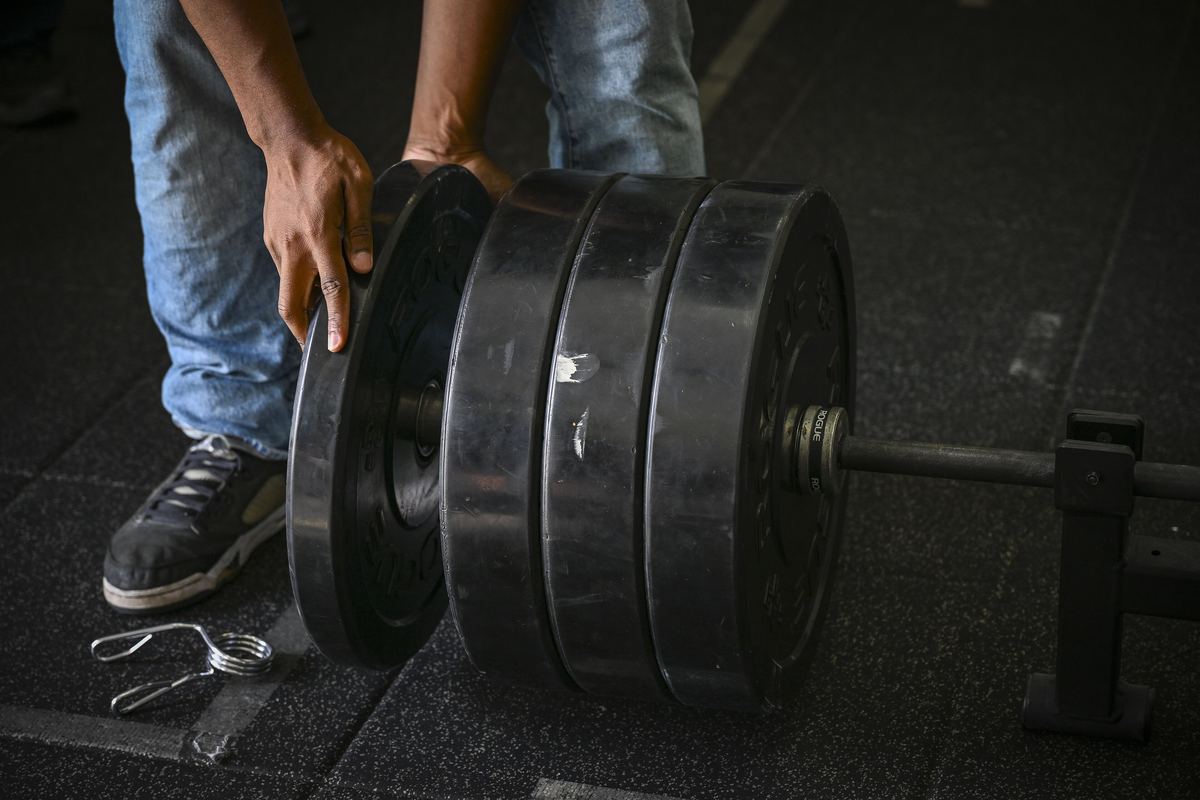
.jpg)
General education, not medical advice. AI-assisted research and drafting, human-edited and checked against the cited sources. How we work.
Key takeaways
- The squat, deadlift, bench, overhead press, and row cover most needs.
- Compounds are the backbone; accessories fill small gaps.
- Groove technique with moderate weight before loading heavy.
- Keep the bar over mid-foot on squats and pulls.
- Film sets from the side to audit your own positions.
On this page
Why compounds come first
Compound lifts move multiple joints and train large amounts of muscle at once — the squat, deadlift, bench press, overhead press, and row. They let you handle the most load, drive the most systemic growth stimulus, and carry over to real-world strength. In most well-designed programs, compounds anchor the session while you are fresh; isolations come after.
The big five and what they train
- Squat — quads, glutes, core.
- Deadlift — posterior chain, back, grip.
- Bench press — chest, front delts, triceps.
- Overhead press — shoulders, triceps, core.
- Row — lats, upper back, biceps.
| Lift | Primary muscles | Secondary muscles | Typical rep range for size |
|---|---|---|---|
| Back squat | Quadriceps, glutes | Adductors, spinal erectors | 5–10 |
| Deadlift / Romanian deadlift | Glutes, hamstrings, spinal erectors | Upper back, forearms | 4–8 |
| Bench press | Chest, front delts, triceps | — | 5–12 |
| Overhead press | Front and side delts, triceps | Upper chest, upper back | 5–10 |
| Barbell or cable row | Lats, mid-back | Rear delts, biceps | 6–12 |
Rep ranges are practical defaults inside the 6–12 RM emphasis recommended for hypertrophy by ACSM (2009); heavier sets also build muscle when taken close to failure.
Technique cues that matter most
Brace your core as if about to be punched, keep the bar path efficient, and own a full range of motion you can control. For squats and deadlifts, keep the bar over mid-foot; for pressing, keep wrists stacked over elbows. The American College of Sports Medicine (2009) progression guidelines is a solid technical reference. If a cue causes pain, stop and reassess rather than pushing through.
How to program compounds
Train the main compounds 2–3 times per week in the 3–8 rep range for strength and size. Rotate variations (front squat, incline bench, deficit deadlift) to manage joints and cover weak points. Two to four hard working sets per compound per session is plenty when intensity is high.
| Compound | Isolation | |
|---|---|---|
| Joints moved | Two or more | One |
| Muscle trained per set | Several groups | One target muscle |
| Load | Heaviest you can handle | Light to moderate |
| Best place in session | First, while fresh | After compounds |
| Main job | Bulk of strength and size | Fill gaps, add targeted volume |
| Fatigue cost per set | Higher | Lower |


Why technique comes before load
Heavy compounds reward good positions and punish sloppy ones. Spend your first weeks grooving the pattern with moderate weight: brace the trunk, keep the bar over mid-foot on squats and pulls, and control the descent. A coach or a recorded set from the side is worth more than another five kilos. Load only follows once the movement is repeatable.
Common questions
Are compound lifts better than machines?
Compounds are efficient and build the most muscle per exercise, but machines are excellent complements for isolation, safety, and training around injuries. A good program uses both.
How often should I do the big lifts?
Two to three times per week per lift is a common range. Frequency lets you practice technique and distribute volume without excessive per-session fatigue.
Are deadlifts safe for beginners?
Yes, with coaching and light loads to learn the hinge pattern. The deadlift is a fundamental movement; the risk comes from ego loading and poor bracing, not the lift itself.
Limitations of this guide
Exercise choice should fit your body and equipment. If a lift hurts a joint, a close variation (for example a safety-bar squat or a neutral-grip press) usually trains the same muscles. Technique cues here are general and are no substitute for in-person coaching.
References
- American College of Sports Medicine (2009). Progression models in resistance training for healthy adults. Medicine & Science in Sports & Exercise, 41(3), 687–708. PubMed (opens in a new tab)
- Schoenfeld BJ, Ogborn D, Krieger JW (2017). Dose–response relationship between weekly resistance training volume and increases in muscle mass: A systematic review and meta-analysis. Journal of Sports Sciences, 35(11), 1073–1082. PubMed (opens in a new tab)
Related tool: One-Rep Max Calculator. Estimate your max from any set of 1–12 reps with three formulas, then get percentage, rep-target and warm-up tables.
Open the 1RM calculatorRelated guides
This guide is general fitness education and does not replace advice from a doctor, registered dietitian or qualified coach. Stop any exercise that causes sharp pain. See the full disclaimer.