Isolation Exercises: When and How to Use Them for Growth
Isolation exercises train one joint at a time, which makes them useful for adding volume to muscles that compound lifts under-train, such as side delts, biceps, calves and hamstrings. Do them after your compounds, usually for 10–20 reps.

General education, not medical advice. AI-assisted research and drafting, human-edited and checked against the cited sources. How we work.
Key takeaways
- Isolation adds targeted volume to lagging muscles.
- Program single-joint work after your compounds.
- Two to four sets of 10–20 reps suits most accessories.
- Move slowly and feel the target muscle work.
- A controlled full stretch often beats extra load.
On this page
The honest role of isolation work
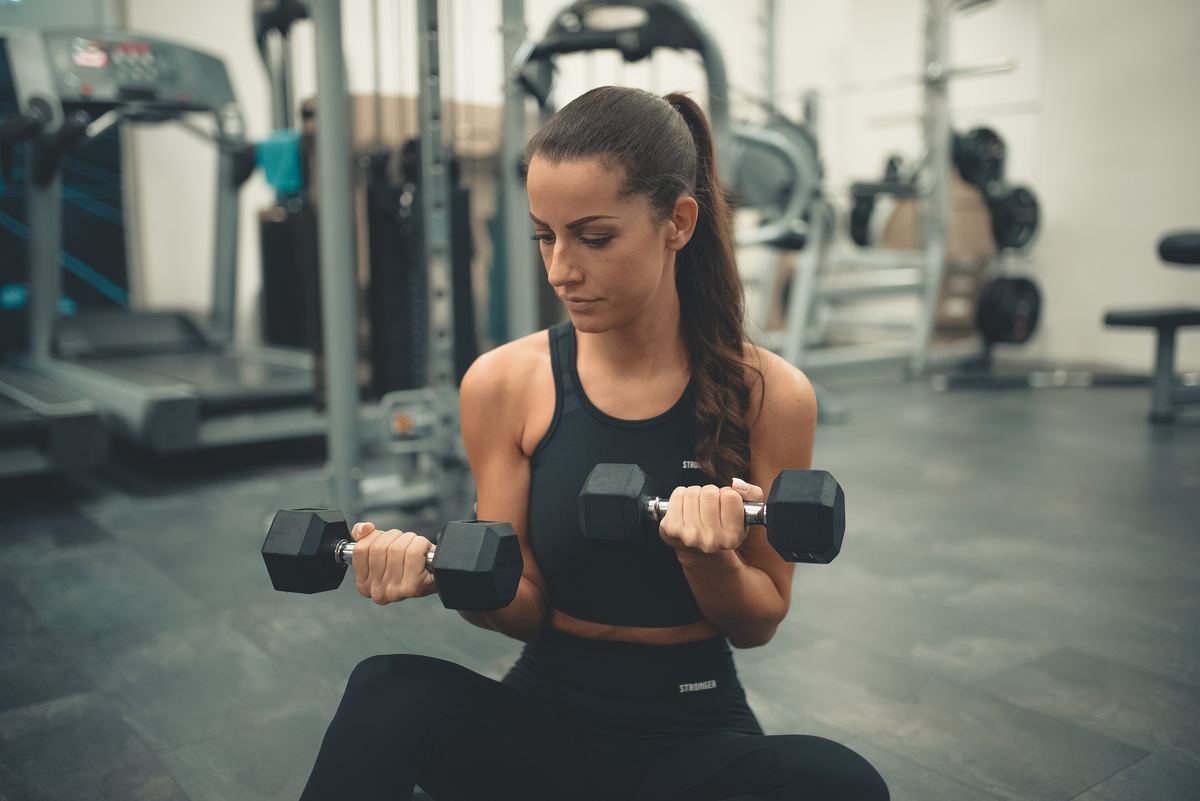
Isolation exercises train one muscle at one joint — biceps curls, lateral raises, leg extensions, cable flyes. They won't build a physique on their own, but they fill gaps compounds miss: side delts, biceps peak, calves, and rear delts rarely get enough from big lifts alone. Think of them as the finishing coat after the compounds do the framing.
Muscles that benefit most
- Side delts — lateral raises (compounds barely hit them).
- Biceps & triceps — direct arm work for size.
- Rear delts — reverse flyes for posture and balance.
- Calves & hamstrings — often lagging without isolation.
| Muscle | Why compounds under-train it | Good isolation choices | Reps |
|---|---|---|---|
| Side delts | Presses mostly hit the front delts | Lateral raise (dumbbell or cable) | 12–20 |
| Biceps | Rows and pulldowns limit by the back first | Curls (incline, preacher, cable) | 8–15 |
| Triceps (long head) | Presses train it in a shortened position | Overhead extension | 10–15 |
| Hamstrings (knee flexion) | Squats barely train it | Lying or seated leg curl | 8–15 |
| Calves | Little direct work in most lifts | Standing and seated calf raise | 10–20 |
| Rear delts | Easily dominated by lats and traps | Reverse fly, face pull | 12–20 |
Muscle grows across a wide range of loads when sets are taken close to failure (Schoenfeld et al., 2021), so higher reps on small joints are a comfort and safety choice, not a compromise.
How to program isolations
Place them after your compounds, in the 10–20 rep range at RIR 0–2 — joints tolerate higher reps well here, and this is where chasing the pump is genuinely useful. Two to four sets per small muscle per session, a few times a week, is plenty. In the dose–response meta-analysis by Schoenfeld and colleagues (2017), greater weekly set volume was associated with more muscle growth. That analysis counted total hard sets per muscle, which is why isolation sets also count toward your weekly tally.
Common isolation mistakes
The big errors are using momentum, going too heavy so a bigger muscle takes over, and skipping the stretched position. Slow down, feel the target muscle, and prioritize a full range. On lateral raises, lead with the elbows; on curls, keep the upper arm still.


Technique that makes small moves count
Because the loads are lighter, sloppy isolation work wastes the set. Move slowly, feel the target muscle shorten and lengthen, and resist the urge to swing. A full stretch under load — the bottom of a curl or a lateral raise held at the top — often drives more growth than piling on plates you cannot control.
Common questions
Do I need isolation exercises to build muscle?
Not to start, but they become valuable for balanced development. Compounds build the base; isolations bring up lagging muscles like side delts, arms, and calves.
How many reps for isolation exercises?
Higher ranges of 10–20 reps usually work best, taken close to failure. Joints tolerate this better than heavy low-rep isolation work, and the growth stimulus is excellent.
Should isolations come before or after compounds?
After. Do your heavy compounds while fresh, then finish with isolations. Pre-exhausting with isolations can compromise your main lifts.
Limitations of this guide
Isolation work adds volume; it cannot replace a program built on progressive overload. If weekly volume for a muscle is already high, adding more isolation sets may add fatigue rather than growth.
References
- American College of Sports Medicine (2009). Progression models in resistance training for healthy adults. Medicine & Science in Sports & Exercise, 41(3), 687–708. PubMed (opens in a new tab)
- Schoenfeld BJ, Ogborn D, Krieger JW (2017). Dose–response relationship between weekly resistance training volume and increases in muscle mass: A systematic review and meta-analysis. Journal of Sports Sciences, 35(11), 1073–1082. PubMed (opens in a new tab)
- Schoenfeld BJ, Grgic J, Van Every DW, Plotkin DL (2021). Loading recommendations for muscle strength, hypertrophy, and local endurance: a re-examination of the repetition continuum. Sports, 9(2), 32. PubMed (opens in a new tab)
Related tool: One-Rep Max Calculator. Estimate your max from any set of 1–12 reps with three formulas, then get percentage, rep-target and warm-up tables.
Open the 1RM calculatorRelated guides
This guide is general fitness education and does not replace advice from a doctor, registered dietitian or qualified coach. Stop any exercise that causes sharp pain. See the full disclaimer.